Should I do paid advertising on Facebook?

Did you think Facebook was big? Well, think again…Facebook is humungous! Not only is it the biggest social network out there, but it’s also one of the largest and results-oriented online advertising platforms that exist in the entire world.

How to run a successful Facebook paid ads

This fact actually blew my mind considering its beginnings as a uni intranet system and it shows how far we’ve come.
What shouldn’t come as a surprise however is that Facebook, with a user base of approximately 2 billion, has the potential to help you nail down the majority of your target audience. I.e. People who are actually interested in doing business with you.

All this sounds great, right? But in order to get the kind of positive results you want, you need to know what goes into running successful Facebook paid ads. Because if you get that right then it gets a whole lot easier to get a high return on your initial investment.
Don’t be discouraged by the process if you’ve never worked with Facebook paid ads before it can feel really frustrating. This is your money you are investing and it is real so the last thing you want is to waste your budget, here are some ideas to avoid just that.

Choose your market goal objective i.e.

  • More sales for your latest product?
  • Are there any quality leads that you can nurture?
  • Can you improve brand awareness?
  • Can a company blog increase your traffic?

No matter what your ultimate objective is, the Facebook paid ads you create and the campaigns you run must be aligned with it — right from the start. This helps you achieve two things:

  1. You will be able to design more relevant and click-worthy ads that your audience can connect with.
  2. You will be able to choose the best and the most relevant campaign objective (e.g. Local Awareness, Conversions, etc.)

Remember, choosing the right objective is integral for your campaign, not only because it’ll stop you from losing your advertising dollars but also because it’ll set you up for better Facebook paid ads campaigns in the future.

Target properly…Don’t waste your money!

SIZE ISN’T EVERYTHING… I guess you’ve heard that before? This is also true of Facebook’s user base! And especially so when it comes to choosing your audience.

Please avoid targeting anybody and everybody with your ads… Quality over quantity and so on and so forth! Doing so may let you generate a lot of engagement and a whole bunch of paid clicks. But what’s the actual point if the people seeing your ad if they aren’t actually interested in what you have to offer? Even if they engage and click, they won’t convert because they cannot benefit from your service or product.
So, don’t waste your money.

What size is your perfect size?

Some useful questions:
How large is the group of people that will be interested in your product or service?
Is it bigger or smaller than you thought?

In order to experience a strong return on investment, try to achieve a balance between the following:

  • Quality of your audience
  • Size of your audience
  • The price you’re paying to reach out

It’s all about the images

Facebook ads are all about the visuals. This means that if users stop scrolling and look at your ad, they will focused on how interesting the image is to them.
The challenge is to match the visuals or creatives used to fit the target audiences’ taste. If you snooze you lose (their attention) and their precious clicks.
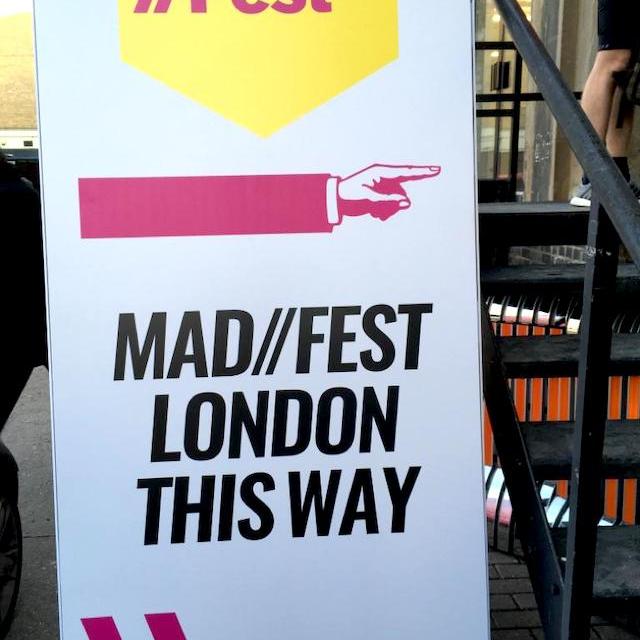
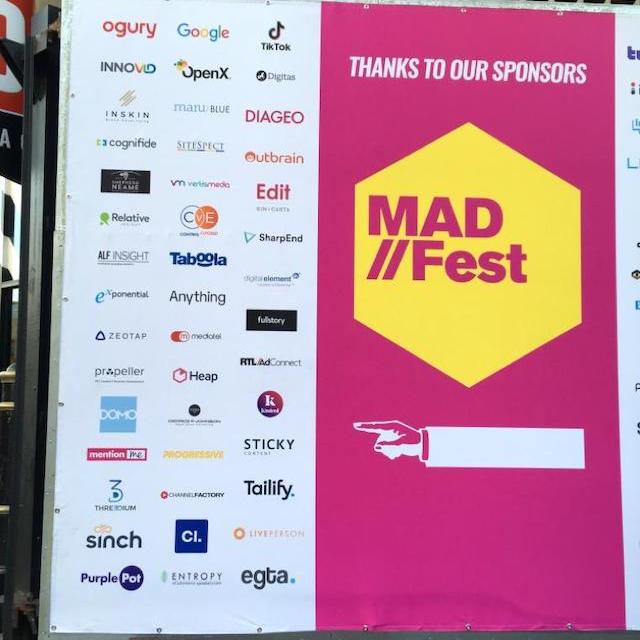
Mad//Fest 2019 wrapped up

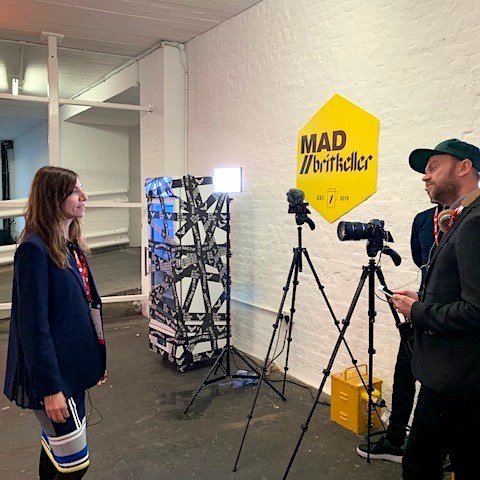
A huge thank you to our friends at MAD/ Fest for curating such a powerful and future-focused event last week. The Vertis team was delighted to sponsor the two-day conference that brought together the brands and people leading change across marketing, advertising and tech. From mega global brands like Google, Snapchat and TikTok through to fresher-faced startups, like, well, us, we came together to meet and learn in a hub of innovation, creativity and culture.

Brand clarity and purpose

Highlights include Dishoom’s Thamil Thakrar share how this deeply authentic group has imbued culture, story and experience into its brand to truly disrupt its category – on their terms, to deliver a customer experience that’s big-hearted and first class.
Elsewhere Skyscanner’s Jo McClintock took a full-house through the growth brand’s marketing transformation, rooted in values – for them, everything starts with the traveller – data and an attitude of courage.

CMO Katie Evans shared Burger King’s journey to re-invent itself as a legacy brand, and its integrated strategy to create Whopper Day resulting an instant 30% surge for the brand.
The common thread running through these brand strategies is having foundational values and purpose at your core.

Key adtech trends for 2020

Laura caught up with MAD//Fest’s content team to share her thoughts on 2020’s key adtech trends too. Here’s what she predicts:

  • With 80% of internet traffic being video by 2020, marketers will need to ensure their content creates cut-through. Using the latest video formats across your marketing funnel is how your brand will stay competitive.
  • Producing innovative, memorable content with storytelling at its centre will create the opportunity for brands to connect with their customers on a more emotional level – essential for the purpose-led consumer.
  • We’re seeing a rise in long-form video content. Already brands such as Patagonia are going beyond “snackable” content, to create longer-form (beyond 3 minutes) content that is engaging, culturally relevant and inspires stronger brand loyalty.

Putting human back in brands

MAD//Fest was the opportunity for our team to forge new relationships, explore partnerships and meet our peers in person as well as stay ahead of the adtech trends defining 2020. A great reminder of the power of real connection.
If you’d like to discuss where contextual and native advertising fits in your 2020 plan, get in touch.

How will web advertisements look like in the future?

Let’s take a quick look at the three main trends for the end of 2019

2019 web advertisement trends

1) The Rapid Rise of Identity-Based Pay-Per-Click Marketing

The variety of targeting options have continued to evolve at an amazing speed lately. It is possible now to target people with incredibly specific ads even based on details such as phone numbers and email addresses.

2) AI: The machines strike back!

Manual modalities of optimisations are being increasingly replaced with
automated solutions. This comes with its pros and cons.

Want to know a pro? A pro is that automatic optimisation saves a lot of time.

And now time for a con: there is a degree of loss of control when it comes to the automatic take on advertising.

3) The new mantra is Recycle-Remarket-Recycle-Remarket

The future is the Convergence of paid/organic teams and the rise of content remarketing. It is sooo difficult to be seen at all in organic social feeds, and this is the case EVEN IF users have already liked or followed your brand.

There is a mind boggling amount of competition, and not only from other businesses but from users’ media publications amongst other stuff.
This is where content remarketing makes an entrance: it can distribute your content among the right audience segments, increase brand recall, and generate qualified leads and sales.

The way forward is recycling the fantastic content you already have in order to make the most of the interest consumers have expressed for the ads you are promoting.

Display ads versus native ads

It can sometimes be difficult to understand the digital marketing jargon so, if you are confused, read on…

Display ads versus native ads

Confusing fact *1: One of the first misconceptions surrounding display advertising is that it is all considered display. Well, it’s not.

Confusing fact *2: Native advertising can sometimes be content marketing and sometimes display ads.

So, what is a display ad?

Display ads are normally located in “boxes” along the top of web pages…Like a traditional banner advert or video. They appear on parts on the site that are committed to paid advertising and aimed at creating a rapid conversion.

These traditional display ads are very different from native ads. These are created to blend in with their surroundings, they are a continuation of the environment that they are placed in, which means: less disruption.

Display ads are very straight forward to track and measure and are widely used for this reason. This is also why they are widely ignored.

Native ads, on the other hand, fit into what the consumer is already experiencing, adding to a step by step progression in terms of user journey that makes sense. I think you would agree with Vertismedia on this one: there is no point displaying an add about cars to a consumer who is looking up a gluten free recipe!

What is the brutal truth about advertising?

Native knows what I need before I do…

The brutal truth about advertising

It is an important time for advertising: never has it been accessible to so many people.
There has never been less control over what is distributed generally. To think back at a time when a publisher decided whether to accept all of someone’s budget based on whether their readers were actually engaging with their print ad is ridiculous… But that is exactly how things work today digitally. With the enforcement of GDPR legislation, advertisers have even less control.

A lot of the consumers are now more vocal than ever about not wanting to be exposed to marketing. Ads are being ignored. The first banner ad came out 25 years ago which in internet years is around 100 years for every human year (!). Perhaps what was at one time disinterest has quickly turned into displeasure and to be honest most advertising is just making it worse!

Native advertising presents the consumer with an alternative that is creative, non intrusive and that actually makes sense to their journeys as customers.

I heard someone say the other day, ”Sometimes, I don’t even know what it is I need but I log on to my instagram account or read an article and the “right” ads come up with things that I wanted to get anyway!”.

This is because native ads respect peoples’ boundaries and look nice… This may seem like a strange thing to say but it is also equally as important for the ads not to give you a sore eye!

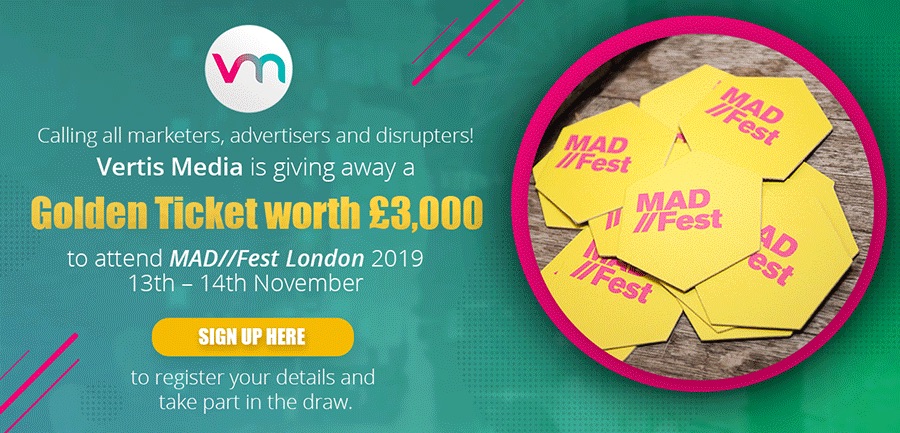
Win a £3000 worth Golden Ticket for MAD//Fest London 2019 with Vertis Media

Vertis Media is hosting a Golden Ticket give-away for MAD//Fest London 2019, the most exciting adtech, martech & tech disruption festival in the world.

MAD//Fest opens its doors on the 13th November for two days of inspiring content with the biggest brands and break-out start-ups. If you’re a marketer, advertiser or disrupter, join us to meet, learn and seek out new ideas, connections and partnerships.

VertisMedia, the European adtech startup are proud sponsors of MAD//Fest, committed to promoting diversity and opportunities for people from all backgrounds to enter the media industry and switch brands, agencies, publishers and tech firms.

The festival line-up includes some of the most influential senior marketers in the UK and:

  • 2,000 + brands
  • 150 + speakers from the world’s top brands, agencies + platforms
  • Pub of the future, interactive cocktail bar + MAD//Senses Room
  • 100 exhibitors across three curated halls.
  • Lots + lots of networking, drinks, parties + unconventional fun in an old East End brewery.

Register here for a chance to join the people carving out the future of marketing, advertising and technology.

The winner will be announced on 08/11/2019.

Want to succeed in Native Advertising? Ask yourself these 5 questions

strategies for native advertising

1) Are you aligned with the native user’s mindset?

Users of native advertising are a little bit different: when they click they are after new content or exploring a website because they’re ready to discover something new. That’s why, successful content in native advertising often explores new concepts, entertains, or is informative.

2) Are you using enough pictures and videos?

These are the only type of content that look like they have a future in native.
Consumers are becoming increasingly visual and native ads have the ability to cater to that perfectly.

3) Are you segmenting your audience?

This allows the ads to go to the right place and at the right time! It qualifies consumers according to what they are actually interested in. Know your audience and optimise the results that data gives you. That way when you narrow down the focus you are pinpointing the right segments.

4) Have you aligned your headline and keywords…

…To the content in the ad? In this way you are sure fit in seamlessly with the context you are placed in. Like everything advertising- and content-related, performance will depend on your content and your audience.

5) How are you targeting?

Geo-location is the way forward. Local is key when it comes to certain types of business where geographical relevance is everything when it comes to the success of an advert.

What is digital display marketing?

Display advertising is a type of advertising that uses text, animations, photos or videos to target users with a commercial message.

digital display marketing

There are 3 main types of display advertising campaigns:

  1. Retargeting
  2. Acquisition
  3. Brand awareness

Retargeting, also known as behavioural marketing relies on custom segmentations in order to deliver relevant ads to your audiences.

Acquisition ad campaigns can be very expensive and not give great results: a lot of banner ads are competing for the same space with highly retargeted ads that have a stronger chance of converting.

Brand awareness focuses on reach as opposed to direct conversions. The aim here is to reach as many people as possible and make sure they get interested in the brand/product advertised. These campaigns need to run for longer if they are going to be effective

A Complete Guide to Contextual Advertising

Relevant ads for everyone are a double winner: they brings pros to both the consumers and the brand.

Distributing a relevant piece of information to the right person at the right time means the user is more likely to discover that they are interested in something they perhaps hadn’t thought of before- it widens their horizons. At the same time the brand has a higher chance of making a sale.

computer and contextual advertising

What is contextual advertising?
Contextual advertising (also known as contextual marketing) is a form of targeted advertising, generally appearing on websites and in apps.

Different data for different brands
Various elements can be considered for contextual advertising. Different brands will be interested in different data: for instance, location could make all the difference for a hotel or restaurant.
• Language
• Location
• Weather
• Time of day
• Device
• Preferred channel
• Past behaviour
• Purchase history

Even holding the above information, brands cannot be as accurate as they would like to be in how they organise their marketing strategy. In fact, it doesn’t help that users carry out a lot of their research outside of the brand’s area of impact. So, though traditional marketing campaigns are still vitally important, the other aspects of this journey give brands an opportunity to continue to have a powerful input.

What are the obstacles to contextual marketing?
1) The first obstacle to employing targeted ads is a lack of usable data. While we live in an age of big data, problems exist in utilising it in order to find out relevant information.
2) Technology: Connecting different data sets is partly a problem with existing technology.

Solution: “acting with context”
By employing information regarding sales, CRM data, web data, reviews & feedback, and social data, you can build up a picture that will carry your campaign forward for any brand. For example, if you are going to target a particular profession on LinkedIn, your “profile” for that sector can provide information on how best to connect with that segment.

Programmatic and native: a match made in heaven?

Combining programmatic with native advertising will help to create the perfect combination that will ensure a rise in sales for your business.

What is Programmatic advertising?

It is an automated process that involves an auction, where the winner is the one willing to bid the most on a web page. The top price each advertising company is willing to bid for the impression is fixed which means that these mini auctions are be completed within the time it takes for a page to load.

What is Programmatic advertising4

Programmatic advertising allows you to target the right audience– the once actually interested and more likely to have an interest in your brand.

Vertis Media combines programmatic with native advertising creating that perfect combination that will ensure a rise in sales for your business.

This report shows that native advertising, with its tailor made created format, will be responsible for 63.2 % of all mobile display advertising by 2020. The combination to programmatic means we can gear audiences to your brand message in a way that is guaranteed to generate the results you need to hit your targets.

Native and programmatic together lead to ads are delivered contextually to consumers who are most likely to be interested in what you are promoting, which for your company means a more efficient use of your advertising budget. It is a match made in heaven: the native side ensuring that the information you are transmitting adapts to the look&feel of where it is positioned and the programmatic side, able to extend your reach to the right audience.

Programmatic marketing is seen as the future of advertising on the web, with Google targeting 60% of digital advertising budgets spent on Programmatic by next year. According to these stats, programmatic will see a constant and steady rise over the next few years and to take this a step further this other report predicts that by the end of 2019 it will be 50% of all advertising.

Programmatic and native have partnered us in order to involve individuals in advertising campaigns in both a more relevant and respectful way, ensuring that the information they see is engaging as it is pertinent to their existing horizon.